
First attempt to introduce a legal framework for the adoption of children in England and Wales
The Poor Law Amendment Act 1889 enabled the poor law guardians to assume parental rights by administrative fiat over orphaned and deserted children (widely referred to as ‘poor law adoptions’).
The Infant Life Protection Act was introduced in response to widespread scandals of ‘baby farming’, whereby a single mother placed a baby for informal adoption for a fixed fee by a third party with no expectation of further contact. It became apparent that some ‘adoptive parents’ had taken in numerous infants, many of whom died when the money ran out.
The Poor Law Amendment Act enabled the poor law guardians to assume parental rights by administrative fiat over children whose parents were deemed ‘unfit’ (widely referred to as ‘poor law adoptions’).
The Mental Deficiency Act introduced a provision whereby a woman who gave birth to an illegitimate child while she was in receipt of poor relief could be declared a ‘moral imbecile’ and incarcerated for an indefinite period.
National Children Adoption Association was founded by Clara Andrew
Its primary concern at that time was infant mortality and the welfare of unmarried mothers and their illegitimate children. The original functions were: 1) To obtain reform of legislation to ensure that fathers contributed more financial support 2) To secure the provision of adequate accommodation to meet the varying needs of mothers and babies throughout the country, with the special aim of keeping mother and child together; 3) To deal with individual enquiries from, or on behalf of, unmarried mothers.
Hannah Brown’s autobiography, The Child She Bare, was published. She had spent her childhood in the Foundling hospital (1866-1881) and the book included a furious indictment of the stigmatisation of illegitimate children and their mothers.
My mother was born in 1919 to a 16 year old girl. Through Ancestry and other records we’ve discovered quite a lot about her birth mother.
The Hopkinson Committee Report recommended introduction of legal adoption.
Between 1922 and 1925 eight bills introduced to Parliament to legalise and regulate adoption – all failed to become law.
The Bastardy Act increased the amount of child support a father could be required to pay because “it is most important to keep the mother and child together”
The Tomlin Committee Report supported legalised adoption but questioned the merits of breaking all ties with the birth family.
1926 introduced a legal framework for adoption in England and Wales. Rights and responsibilities for adopted children transferred permanently from birth parents to adoptive parents. Adopted children retained right to inherit from birth family but did not acquire right to inherit from adoptive parents.
Adopted children acquired liability to maintain adoptive parents who could not support themselves. Both birth parents required to give consent, which could only be dispensed with if they had abandoned, deserted or refused to maintain the child. Registrars required to keep a register of adoptions which preserved details of birth certificates related to adoption orders; although this was sealed, it made it possible to trace adopted children.
Find out more at https://buttleuk.org/what-we-do/our-work/our-history/
The Legitimacy Act made it possible to legitimise children whose parents married after they had been born.
Adoptees in Scotland retained the right to access their original birth certificate when they were 16.

“Shortly before I left home, my mum told me she was adopted. Although this news was a shock, adoption was not unfamiliar to me: my great-grandfather was adopted, so was my great-aunt. Now my mother’s made a third in the family…”
A Committee chaired by Miss Florence Horsburgh MP67 was appointed to inquire into the methods pursued by adoption societies or other agencies engaged in arranging for the adoption of children; and to report whether measures should be taken to supervise or control their activities. The Committee’s Report, published in 1937, led to the enactment of the Adoption of Children (Regulation) Act 1939.
Following the Horsburgh Committee Report, which identified malpractice in some voluntary adoption agencies, the Adoption of Children (Regulation) Act was introduced.
This required a local authority to be notified of any informal adoption of any child under nine years old. It required supervision by local authorities of children placed through a third party for adoption and provided for a probationary period in cases arranged by an adoption society. It also made it illegal to advertise children for adoption or to adopt for financial reward save by a local authority. Due to the outbreak of war in 1939, it did not come into force until 1943. (Pepper 2019)
The universal benefit was introduced to help families with the cost of raising children. The benefit was paid to the mother (including single mothers), but only for second and subsequent children.
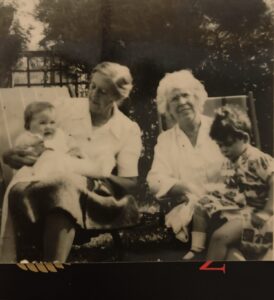
“I was born at the end of WW2. My mother was separated from her husband, and with her very young son was evacuated to the Sussex coast. My father was a flying officer in the Canadian air force, stationed nearby. He was recalled to Canada before my mother knew she was pregnant.”

Laura (right) with sister Edith and brother William
“I was born in 1945, and grew up as an only child in a happy household in one of the poorer parts of South London. In 2001 my mother died, and it was at her funeral that I (at the age of 56) discovered that I was adopted. It was clear that all of my cousins were fully aware of this, and that I was the only one that had been kept in the dark.”
Adoption of Children County Court Rules (1949) and High Court Rules (1950): enabled adoptive parents to conceal their identity from birth parents. Serial numbers rather than names appeared on the application form.

Anthony as a boy
“0-25 was an emotional rollercoaster from which I have yet to completely recover though I am 90% there. This period of my life contained enough trauma and misery to leave a lasting impact which I have been largely able to successfully mask.”
The Adoption Act gave adopted children the right to be treated as children of the adopters for the purposes of the disposal of real or personal property (with the exception of titles of honour and property linked to them); increased provisions for dispensing with consent from birth parents to include persistent ill- treatment of the child; introduced a provision by which the birth mother could not give consent to the adoption of her baby until the infant was six weeks old.
The Act also introduced monitoring for all adoptions: a probationary period of three months before an adoption order could be granted; adoptive parents had to notify the welfare authority at least three months previously of their intention to apply (already required in case of children placed by adoption societies, now for all potential adoptions).

Pat and her daughters
“I always knew I was adopted. I can’t remember not knowing. That’s probably the best way. But there’s always a question mark over your head. You really do fantasise about who your parents are and what might have been.”
John Bowlby’s ‘Maternal Care and Mental Health’ was published setting out the maternal deprivation hypothesis.
The Foundling Hospital Act introduced provisions to replace the Foundling Hospital birth certificate with one which did not stigmatise the children by identifying them as Foundlings.
The National Council for the Unmarried Mother and her Child published a report on all the cases they had dealt with in 1953. It explored the reasons why single mothers were not supported by their parents.
“I can’t remember a time when I didn’t know I was adopted. I have a vague memory of my Mum telling me “your mother was a nurse who was too poor to keep you”. That was the “official” story and I think it’s all I knew for a long time.”
Allowed adoption agencies to place children not under their control, such as those looked after by local authorities, with adopters, submitting local authorities to the same regulation as adoption agencies. Adopters were required to give three months notice to local authorities of their intention to adopt.
Anonymous adverts offering to care for children were prohibited. The Court was permitted to dispense with parental consent to adoption if the parent or guardian of the child had persistently failed without reasonable cause to discharge the obligations of a parent or guardian. It also set out that children awaiting adoption or placed with strangers, below the upper limit of the compulsory school age, were deemed a “protected child‟ and were to be visited “from time to time‟ by officers of the authority and the premises where they were could be inspected.
Single mothers could no longer be incarcerated for ‘moral deficiency’.

“I was born in a Church of England mother and baby home and taken from my birth mum at six weeks. My Mum was 16 and my Dad was 17. They were a couple and stayed together and later married. I have two full birth sisters. My reunion 32 years ago was a big part of my healing journey and I know I am very lucky that I had a good reunion. Here are two letters I wrote to my birth Mother and birth Father.”
British Adoption Project was set up to find adoptive families for Black, Asian and mixed race children and record the outcomes of these adoptions
Iris Goodacre’s research on the extent to which statutory regulations on the adoption process were followed in practice was published. The study revealed numerous deficiencies.

“I was told about my adoption aged five. You’re special, you’re chosen, we selected you! This was a practiced narrative I carried clumsily until I hit puberty, when it fell apart. If I’m so special, why did my mother give me up? If I’m so chosen, why do I feel so rejected? I scrabbled for an identity but found no foundation upon which to build it.”
Study assesses extent to which adoptions have been successful. Key findings concerning enduring impact of illegitimacy.
The Abortion Act 1967 made abortion legal up to 28 weeks gestation, on certain grounds.
NHS Family Planning Act enabled local authority funded family health clinics to give contraceptive advice to unmarried women.

“I was born on 4 January 1967 and adopted at five weeks old. I was told about being adopted so early that I don’t remember ever not knowing. Adoption wasn’t a biggie. It just was. I saw my adoptive parents as my real parents because they were. My birth parents never crossed my mind.”

This was 1967 and I was three months old. My understanding is that I’d spent those three months with my birth mother in a mother-and-baby home in Rotherham. When my Mum and Dad brought me to the family home in Barnsley all I did was cry. Maybe that was part of the bond that my Mum felt with me—to nurture me and to care for me.
Peak year for adoptions in England and Wales – 24,381 adoption orders were made, 16,184 to non-relatives.
I was an adoptee of the “forced adoption era” taken purely because my birth mother was an unmarried teenager. As an adoptee being adopted in 1969, I had absolutely no mental health support, nor as a teenager, young adult or adult. Adoptees taken today often have more complex backgrounds.
The Association of British Adoption Agencies (ABAA) was formed, later (1975) adding ‘Fostering’ to its name to reflect the increasing importance of fostering
The Committee argued that ‘society must offer an alternative plan for the care of children who cannot be brought up by their own parents and also expressed the view that existing bonds between adopted children and their wider birth family should not be severed.
They noted that the numbers of babies being relinquished for adoption had decreased following the legalisation of abortion and the greater availability of contraception. They also noted improvements in the position of unmarried mothers, including more tolerance and less stigmatisation of illegitimacy.
Houghton Report published – recommends access to birth records for adoptees over 18
Publication of Jane Rowe and Lydia Lambert: Children Who Wait: A Study of Children Needing Substitute Families, London: BAAF. Influential study of children in care in England exploring issues concerning permanence. Findings underpinned the introduction of freeing orders.
Local authorities introduced a comprehensive adoption service, including provision of temporary board and lodging where needed by pregnant women, mothers or children; arrangements for assessing children and prospective adopters, and placing children for adoption; counselling for persons with problems relating to adoption.
The Act also introduced the requirement for adoption societies to be formally approved by the Secretary of State and Section 28 prohibited third party/private adoptions but did not come into force until 1982. The Act made it possible for an adopted person who had attained the age of 18 ‘to obtain such information as is necessary to enable that person to obtain a certified copy of the record of his birth’ and introduced provisions under which children could be freed for adoption.
The Child Benefit Act extended family allowance (now child benefit) to include first child in family.
Explored adoptees needs to find out about their birth family; 70 adult adoptees were interviewed and fell into two groups: those who primarily wanted background information about their birth family and those who wanted to establish a relationship with them.
The Adoption Act consolidated previous adoption legislation. The act did not make the child’s welfare the paramount consideration, however it did establish that any decision in relation to adoption by a court or adoption agency shall have regard to all the circumstances, the first consideration being given to the need to safeguard and promote the welfare of the child throughout their childhood. The Act did not permit adoption by unmarried couples (same sex and opposite sex).

Oliver & Edward Simpson
“I was born just before the heatwave of ’76. As far as I’m aware, my father was never on the scene, so my just 18‑year‑old mother was on her own. She came from a large family; however, I think she received very little positive support.”
The Adoption Resource Exchange was formed as a limited guarantee company by a group of social work professionals

“In the late 1970s, my husband Alan and I applied to Wandsworth Council’s adoption service. In 1979, Rita, a Black girl of 18 months, whose mother was suffering from schizophrenia and unable to care for her, came to live with us from a foster home.”

The Family Law Reform Act removed remaining legal disadvantages of illegitimacy.
The Children Act 1989 clarified the principle that, when courts were making decisions about the upbringing of a child (or the administration of their property), the child’s welfare had to be their paramount consideration. It introduced a presumption of contact for looked after children. It also introduced the adoption contact register.

“I don’t even remember being told about the adoption so it must’ve been quite early. The ethnicity thing has never really been an issue. I think because I’m in such a caring and accepting family being transracially adopted was never a big thing.”
The Hague Convention on Intercountry Adoption aimed at regulating cross border adoptions.
The overall aim of the week is to encourage more people to come forward as prospective adopters.
Quality Protects was introduced in 1998 as the government’s main initiative to improve children’s social services.

“My ex-husband and I got married when I was 23 and we wanted to start a family straight away. After two years I still hadn’t got pregnant and we began fertility treatment. In total, we tried three rounds of IVF without success before we decided that enough was enough…”
“I was born a tiny premature baby on the 9th of January 2000 at King’s College Hospital in London. I later found out that I came into the world high on heroin and alcohol. I had to be readmitted to hospital after I was placed in foster care because I suffered from Neonatal Abstinence Syndrome. Not the easiest start….”
The Prime Minister announced he would lead a thorough review of adoption policy, with the aim of taking a new approach to adoption.
Overview of findings from wide-ranging research initiative underpinning the Adoption and Children Act, 2002.
The Department for Education and Skills commissioned the Adoption Research Initiative (ARi) to contribute to the evaluation of the Adoption and Children Act 2002 and various related the policy initiatives – Seven large and complex studies were funded over an eight-year period between 2002 and 2010
The Act facilitated adoption for children in care who cannot safely return home. As in the grounds for care orders specified in the Children Act 1989, the act introduced criteria for dispensing with parental consent which moved from a focus on parental behaviours to one on the welfare of the child.
The Act allowed for adoption by civil partners, married and unmarried couples, and sole adopters. It also introduced special guardianship, duty of courts to consider contact arrangements/ adoptees to know of birth parent’s wish for contact and post-adoption support including services for birth parents.
“It was May 2003 when I gave birth to my son. I was 17 at the time, very young and naive. I had been to the doctors because my periods had stopped. They did a pregnancy test, which came back negative. I also had chronic health issues., so the doctors suggested my periods might have stopped because of that. I didn’t give it a second thought.”

Carol and her family love to walk in the Yorkshire hills.
We adopted Luca in December 2003, after fostering him for eight months through concurrent planning. I suppose the story really starts a few years before that.
The act established the role of the Children’s Commissioner.

In 2004 Lynne and Emma became the first same sex couple to be approved for adoption in their home town of Bristol. They continue to live in the city with their son Steven who is now 26 years old.

“When you’re adopted, I think the thing you’re worried about most is trying to fit in. You feel so different. Other people’s lack of understanding or outdated attitudes can make it harder to feel accepted. My advice to young adopted people is to keep hold of your adoption story. It’s your story and it’s made you who you are. Own those experiences. Good or bad.”
Selwyn and colleagues’ research on the Costs and Outcomes of Non-Infant Adoptions was published. This is the first major study of children adopted from care in England and Wales, showing them to be a very different population from infants relinquished for adoption.

“I was brought up in foster care then went back to live with my Mum when I was 16. When I fell pregnant at the age of 18 social services did a pre-birth assessment. After the assessment, my social worker went on leave and no-one took over from him…”
Important findings concerning enduring trauma experienced by birth parents whose children have been adopted following committal to care.

“Trying to capture the past fourteen years in a single story is no easy task. This account is scattered, much like our story — and that’s kind of the point. My motivation for writing is that, hopefully, the benefits to others outweigh the discomfort of sharing.”
Overview of findings from wide-ranging research initiative underpinning the Children and Families Act 2014.
Introduced measures to reduce delays in children achieving permanency through adoption (fostering to adopt; changes to matching process). Strengthened access to post adoption support. Increased opportunities for contact with birth family members if in child’s best interests.
Selwyn and colleagues’ study of adoption disruptions was published, giving details of the number of adoptions that disrupt, the factors that influence disruption and the stability of adoption compared with special guardianship and residence orders.
The Education and Adoption Act: made provision for establishment of regional adoption agencies (RAAs).

John’s son today
“Adoption has always been in the background of my life. I lost my own father 18 months ago, but growing up I was always aware of his brother, who disappeared at a young age during the Second World War and never came home. My maternal Nan – orphaned in the early 1900s through tragic circumstances – was ‘unmanageable’ in foster care (aged seven), and became an ‘inmate’ in a home for abandoned girls until going straight into service at 14.”
Publication of research on the life trajectories of infants of unmarried mothers who had been relinquished for adoption in 1958 and 1970 and were now middle aged.

Erin and Rob adopted a little girl, Lauren through Coram in 2021. Erin and Rob discussed whether they wanted children early on in their relationship and adoption was something they were open to exploring…
Damning report on adoption of infants born to unmarried women and the lifelong trauma that many experienced.
In a statement in the House of Commons, Sir Keir said what happened to “tens of thousands of mothers, children and families” was “a stain on our history”.
“The shame is not yours. The shame was never yours. The shame is ours,” he said.
The apology comes after years of campaigning from mothers, adoptees and their wider families, and parliamentary reports into the issue.
2026 will be 100 years since the Adoption of Children Act 1926, which was the first legislation in England and Wales to legalise adoption. This act was a significant step in formalising the process of adoption, providing a legal framework for transferring children to new families.