In the late 1970s, my husband Alan and I applied to Wandsworth Council’s adoption service. In 1979, Rita, a Black girl of 18 months, whose mother was suffering from schizophrenia and unable to care for her, came to live with us from a foster home. The plan for her brother, Danny, two years older, was to live with a family where he would be the only child because he had been neglected as a baby and would require a lot of attention. On finding out about Danny and meeting him, we asked Wandsworth to place him with us so that brother and sister could grow up together. Despite careful preparations for his move, Danny at the age of four was unhappy about it. He had formed a strong attachment to one of the residential social workers.
From the beginning, we agreed to an open adoption because as White people, we could not teach the children about their Jamaican heritage and because they would benefit from knowing their birth family. We had been open to transracial adoption from the beginning and aware that it was coming into question, but it would have been racist to refuse to take in a child of another race. Supervised visits took place with their mother, but she was judged too ill to continue with them after she attacked a social worker and me physically one day. Visits by their father were more successful, although rare. Their father and his family wanted the children to be placed with them, but they were rejected as they were thought by social workers to be too strict. The family contested the case for adoption, but in 1983, a High Court adoption order was granted in our favour, because by that time the children were well settled with us.
Arrangements were made for Danny and Rita to see their father and paternal grandparents over the next few years. This worked reasonably well until Danny was 14. One day in 1990, he went to live with his grandmother, who welcomed him. Despite our pleading, he refused to return to us. Three months later, aged 12, Rita followed him, after nearly eleven years with us. We had accepted Danny’s departure because he had always seemed on the edge of the family, but we were devastated when Rita left. None of our efforts to persuade her to return made any difference. Like Danny, she had gone to her family and afterwards both Danny and Rita said it felt like coming home.
A year after leaving us, Danny came to see us one day and a few months later, Rita arrived with a school friend, to look at her old life. There was no question of either of them wanting to come back to us. Our children had gone for good. Living with their grandparents allowed them to belong to their birth family and taught them about Black culture. Alan and I kept in touch with Danny and Rita as much as possible and after an initial gap, began to see them regularly.
Danny has been a Royal Marines Commando and served in Afghanistan, later running a gym in Kenya. He has lived in London in recent years and is an Uber driver. He has five children, of whom the eldest two are now adults and he lives with the mother of the youngest one. He has always referred to us as his White parents.
Rita trained as a phlebotomist but has since qualified as a district nurse and is an active member of her church. She lives in London with her two daughters and her partner. Rita is clear that she and Danny should have been allowed to grow up with their father’s family as soon as their mother became too ill to care for them. This is surely what would happen now.
Alan, who for years ran the post-qualifying course in mental health social work at the Maudsley Hospital/Institute of Psychiatry, broadened his research into children placed away from home to include adoption and became a key author of adoption studies. My book In Black and White about our experience of adoption was published under the pseudonym of Nathalie Seymour by BAAF in 2007.
Since Alan’s death in 2024, Danny and Rita and their immediate families have been very supportive of me, with visits, outings and practical help and I am grateful for that.
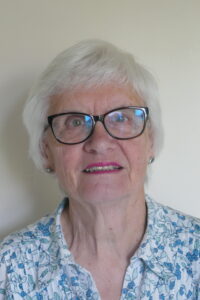
Andrée Rushton