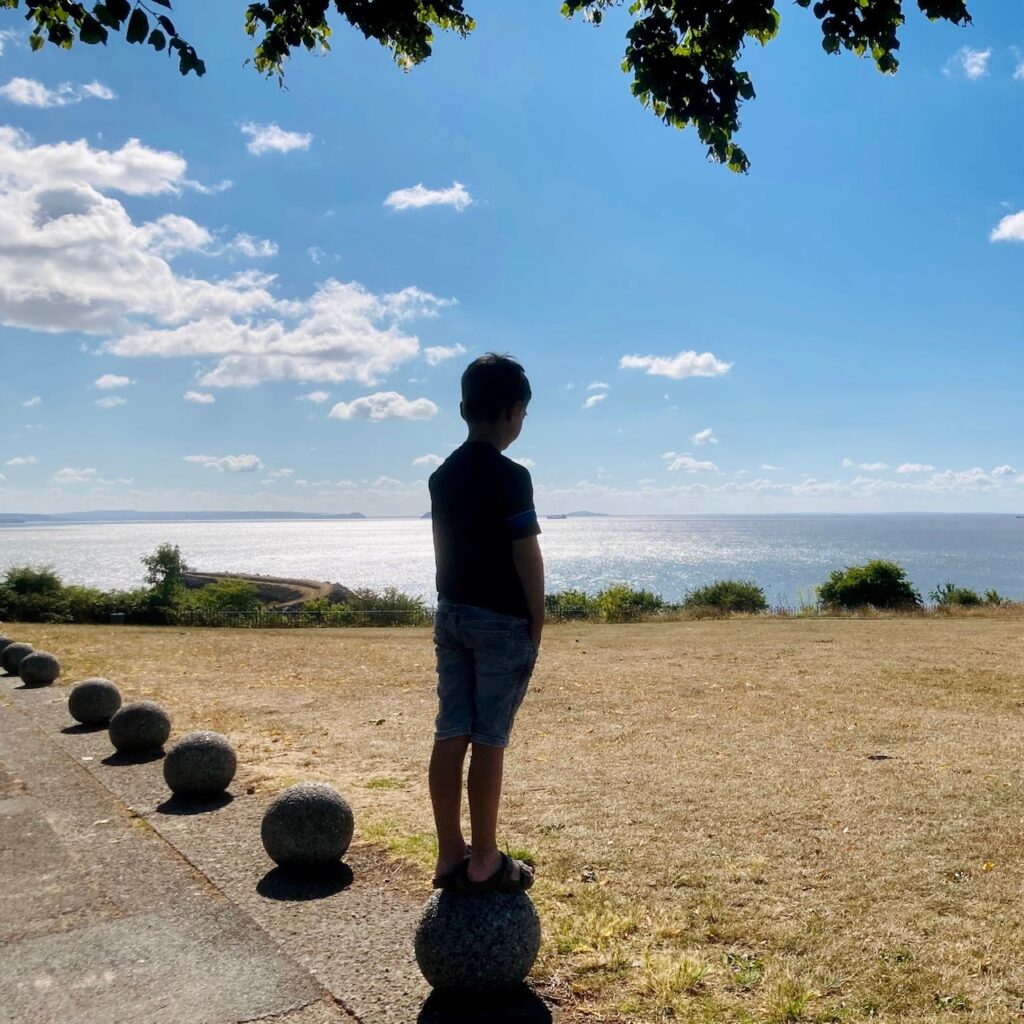
John’s son today
Adoption has always been in the background of my life. I lost my own father 18 months ago, but growing up I was always aware of his brother, who disappeared at a young age during the Second World War and never came home. My maternal Nan – orphaned in the early 1900s through tragic circumstances – was ‘unmanageable’ in foster care (aged seven), and became an ‘inmate’ in a home for abandoned girls until going straight into service at 14.
Then there’s my own journey. As a child in the 70s, (out) Gay men were ‘acceptable’ caricatures on TV—but not teachers, next-door neighbours—and definitely not parents. As an adult, I had an innate desire to be a parent. I think a lot of that came from my own childhood and upbringing—especially from my Mum. The desire to nurture and care for a child was there. But I couldn’t fully access or understand those feelings when I came out in my mid-20s. Coming out as gay wasn’t something you did if you wanted a family; so I spent the next few decades just living my life. But it wasn’t until midlife that I started thinking seriously about meaning—what mattered most, beyond career and independence.
I’d worked successfully in design, travelled, bought a home and built a good life in London. But I wanted to be a parent. At that time, adoption was emerging as a way for gay men to have families. I knew a few early adopters—gay men who are still active advocates now—and meeting them planted the seed.
It took a few years before I really acted on anything though. I went to an information evening at Coram in London, on my own. I also engaged with other agencies, including Norwood, which no longer exists. I met my husband about 16 years ago and began travelling between London and Wales. I told him early on that I wanted to be an adoptive parent. It wasn’t a deal-breaker, but it mattered.
We parked the conversation for a while—we needed to build our relationship first. But it was always there. When we came back to it, things moved quickly, and he said, “Let’s go for it.” So, we built our life in Wales and eventually adopted here.
We had a wonderful social worker who really wanted us to adopt. But going through the adoption process feels like agencies hold all the cards. No one sets out to make it feel that way, but it does. The assessment was intense. We lay everything bare—mental health, relationships, family history. My husband and I had both experienced issues with our mental health. We decided to be completely honest. If they didn’t want us, then it wasn’t right.
By the time you get to the adoption approval panel, it’s usually a done deal. But I think adopters jump through so many hoops. There’s a kind of black humour to it all—you’re bending over backwards to be the perfect prospective parent while other people are just having more kids!
The panel was one of the most nerve-wracking experiences of my life. I could barely speak. It felt like they held my entire future in their hands. They asked how we’d cope if both of us were struggling at the same time while caring for a vulnerable child. It was a fair question, but I was terrified of giving them the wrong answer!
In the end we were approved and soon afterwards our social worker told us about a young boy whose parents were long-term addicts. He had been removed at birth, briefly placed with extended family under a special guardianship, and then returned to care. At the age of one he had already experienced multiple placements. He moved in with us just after he turned two.
He’s an incredible kid. The best thing that’s ever happened to me. But it’s not easy. I created a WhatsApp group for non-adoptive parents at his school because I felt there was a lack of understanding about what adopted children carry. Many of them end up in relatively privileged environments, but that doesn’t erase their early adverse experiences. Our son has struggled at times at school. He’s been misunderstood, and that can be painful.
Our son knows his story and works hard to understand what’s happened to him. What I’ve found difficult is how little broader understanding there is—especially amongst other parents. That’s why I set up the school WhatsApp group, to gently raise awareness. Not to excuse behaviour, but to widen people’s acceptance bandwidth—to help them see that adopted children’s behaviours often come from trauma. We’re not asking for special treatment, just a bit more understanding. It really does take a village!
When things go wrong in school, I feel the judgement. I absorb it. I’m advocating constantly, sometimes in uncomfortable situations—mediations, complaints—and I feel the shame my child feels. Prospective adopters need to understand that: you must be prepared to advocate, to rattle cages, and sometimes be unpopular.
It can feel unfair dealing with the consequences of what happened before your child came to you. That trauma shows up in behaviour, and adopters carry that. People may not say it aloud, but there’s an assumption that it reflects on your parenting. Many adopted children today have experienced significant trauma, neglect and abuse. It’s not the same as decades ago, when adoption was often about social circumstances. Now it’s much more complex, and I don’t think society fully grasps that.
Like all parents, we feel responsible. That can be lonely. But there are other adopters who understand, and peer support is vital—not just in crisis, but when things are going well for you too. My biggest challenge has been how deeply I feel things on his behalf. When he’s hurt, I feel it intensely, and sometimes that turns into anger. I want to protect him. Fix everything. But I can’t.
When his birth mum died, I was away with him visiting family and didn’t tell him for a few days until I was home. I wanted to do it properly with my husband before he went back to school. But when we told him, the first thing he said was, “Why didn’t you tell me sooner?” That stayed with me. Some people questioned whether he even needed to know. But social workers are clear—you tell them, age-appropriately, from the beginning. Adoption is part of their story.
I talk openly with my son about his birth mum. He looks like her. That matters. What’s difficult is holding all of it—the compassion for his birth parents, the reality of their choices, the impact on him, and the behaviours that come from that. Then you’re standing on a playground listening to relatively trivial complaints, and it can feel surreal. We have received some excellent support from some teachers, but if this were any other group of children, there’d be outrage about the lack of initial support in school, and the battle adopters often have on their hands to get it. There’s still a lot of ignorance. While I don’t believe agencies are acting in bad faith, it’s not always in their interest to emphasise how hard it can be. Prospective adopters need to be prepared to advocate, be prepared to be disliked, and find their tribe. I think there’s a growing pushback amongst adopters because they feel support isn’t being delivered when it’s needed.
Adoption has made me a better person. It’s been an adventure—a profound experience, full of joy and pain. My biggest challenge yet. Our son is funny, kind, and brilliant at football. We’ve built a wonderful life around him with support from friends who feel like family. Despite everything he’s been through, he’s a happy, loving child. He didn’t have to be—but he is. For me, he is my son. Completely. I would do anything for him and in the end that’s what I think being a parent is…