Please note, some of the stories featured include descriptions of distressing topics and content that is upsetting or triggering. Some of the stories also include language that is considered outdated, offensive, and unacceptable today.
I am a late discovery adoptee who found out by chance in the 1990s when I already had 3 children that I had been adopted at three months old. When I was told I had a maelstrom of emotions, suddenly everything made sense, all those little hints that I was not quite the same as other members of the family and I should be grateful for things I wasn’t even aware of. I immediately went into a flurry of research into my first identity and family. As this was slightly before mainstream online resources I spent months looking at archives and finally accidentally doorstepping a brother of my original mother. I had lots of therapy which provided a safe space to explore my anger and pain, beating up cushions and shouting (virtually) at my birth and adoptive mothers, ‘wasn’t I a perfectly lovely baby, why did you abandon me’ and ‘why oh why did you continue to lie to me that about my real identity.’ My adoptive father had died when I was nine so that was given as a reason for not telling me as we had been very close.
When I was given a photograph of my original mother it was the first time I had the shock of a genealogical mirror.
I was too late to meet my original parents who had both died before my discovery but met half siblings from both sides in America and Canada. Good to have a sense of genealogical identity but too late to reknit the lost shared history.
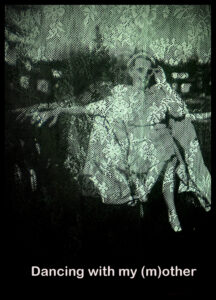
Over time I have explored these experiences of Dis-Locations and Broken Narratives in video and mixed artworks and a practice-based 2018 PhD. This has included work on 19th century Child Migration to Canada on a route travelled by my original mother without me after my birth.
I am continuing to be surprised by my own responses to different discoveries including ongoing research into the effects of CPTSD and the molecular interrelationships between mother and child.
It is a bit like kintsugi, a reinterpretation of the self with clearly defined fissures and cracks joined by gold. “Every life is a piece of art held together with whatever means available”, Pierre Janet quoted by Bessel Van der Kolk in The Body Keeps the Score.
I was the Parcel
Passed from Hand to Hand
Never Knowing who would catch me
Or if I should
Fall into the Darkness
And be
Lost
Written after first discovery